Visit PM Intelli Hub YouTube Channel

AI-Powered Skills for Project Managers

How to Build a Practical WBS for Infrastructure Projects

If you want to Build a Practical WBS for Infrastructure Projects, you must start with one simple principle: structure drives control.

In infrastructure programs—whether highways, water treatment plants, rail systems, or power distribution networks—the Work Breakdown Structure (WBS) is not just a planning tool. It becomes the backbone of:

  • Cost control
  • Schedule development
  • Earned value reporting
  • Change management
  • Contract administration

When the WBS is vague or misaligned, reporting becomes unreliable. Forecasts lose credibility. Scope creep hides inside large work packages.

However, when you build a practical WBS correctly, everything else becomes easier to manage.

This article explains how to design a WBS that works in real engineering environments—not just on paper.


What a WBS Really Is (From First Principles)

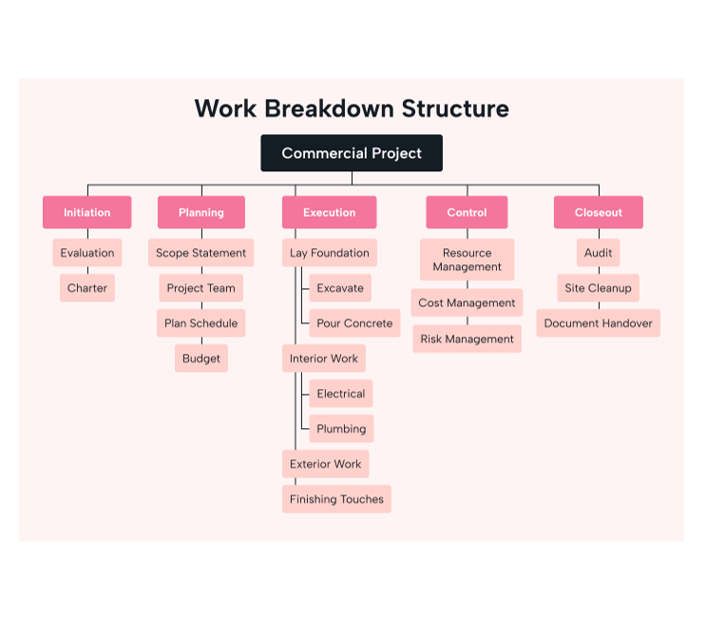
A Work Breakdown Structure is a structured decomposition of total project scope into manageable components.

That definition sounds straightforward. Yet in practice, many WBS structures fail because they:

  • Reflect organizational departments instead of deliverables
  • Combine dissimilar scope elements
  • Lack measurable boundaries
  • Do not align with cost codes or schedule activities

A practical WBS must answer one question clearly:

What exactly are we delivering, and how can we measure it?

The WBS should describe deliverables, not activities. Activities live in the schedule. The WBS defines scope containers.


Why You Must Build a Practical WBS for Infrastructure Projects

Infrastructure projects present unique challenges:

  • Large physical quantities
  • Multiple subcontractors
  • Complex phasing
  • Public oversight
  • Contractual payment milestones

Without a structured WBS:

  • Quantity tracking becomes inconsistent
  • Cost reporting disconnects from field progress
  • Change orders become difficult to isolate
  • Claims analysis becomes painful

For deeper insight into scope discipline, see:
👉 Scope Creep in Engineering Projects: Causes and Prevention

A practical WBS reduces ambiguity before it becomes risk.


Step-by-Step: How to Build a Practical WBS for Infrastructure Projects

Step 1: Start with the End Deliverable

Always begin with the full project outcome.

Example:
“Construction of a 5MGD Water Treatment Facility”

This becomes Level 1.

From there, ask:

  • What are the major physical systems?
  • What are the major contractual components?

Step 2: Decompose by Physical Systems (Level 2)

Infrastructure projects work best when decomposed by systems.

For example:

Level 1Level 2
Water Treatment FacilitySite Civil
Structural Works
Mechanical Systems
Electrical Systems
Instrumentation & Controls
Commissioning

System-based breakdown supports:

  • Engineering clarity
  • Procurement tracking
  • Construction sequencing

Avoid breaking by department (e.g., “Engineering,” “Procurement,” “Construction”). That approach creates reporting confusion.


Step 3: Break Systems into Measurable Work Packages (Level 3)

Each Level 2 system should divide into measurable deliverables.

Example – Site Civil:

  • Earthwork
  • Underground Utilities
  • Stormwater Management
  • Pavement & Concrete
  • Fencing & Landscaping

Each Level 3 element must:

  • Have defined quantities
  • Have a budget
  • Align with schedule activities

If it cannot be measured, it should not remain a WBS element.


Step 4: Validate Against Cost Structure

Now test alignment:

  • Do cost codes map to WBS elements?
  • Can field costs be tracked directly to each package?
  • Do subcontract agreements align with WBS breakdown?

If not, refine before proceeding.

This step prevents future reporting distortions.


Step 5: Align WBS with Schedule Logic

Your WBS should integrate seamlessly with the CPM schedule.

For example:

WBS Element: Underground Utilities
Schedule Activities:

  • Install 12” water main – 1,200 LF
  • Install 8” sewer line – 800 LF
  • Install 10 storm structures

The WBS defines scope containers.
The schedule defines sequencing and duration.

For scheduling fundamentals, see:
👉 Critical Path Method Simplified for Engineering Leaders


Step 6: Confirm Measurability for Earned Value

If you plan to use performance metrics, each WBS element must support objective progress measurement.

Ask:

  • Can we assign percent complete based on installed quantity?
  • Can we apply milestone-based measurement?
  • Can we isolate cost performance by package?

For performance integration, see:
👉 Earned Value Explained for Engineering Projects


Real-World Example: Highway Expansion Project

Consider a $120M highway widening project.

Poor WBS Example:

  • Roadwork
  • Structures
  • Utilities
  • Traffic Control

This structure lacks depth. It hides complexity.

Practical WBS Example:

Level 1: Highway Widening – 8 Miles

Level 2:

  • Earthwork
  • Pavement
  • Drainage
  • Bridges
  • Retaining Walls
  • ITS Systems
  • Maintenance of Traffic

Level 3 (Bridge Example):

  • Substructure
  • Superstructure
  • Bearings
  • Deck & Barrier
  • Approach Slabs

Now:

  • Quantities tie to pay items
  • Costs align with subcontract packages
  • Progress can be measured physically

This structure supports transparent reporting.


Characteristics of a Practical Infrastructure WBS

A strong WBS has the following traits:

  • Deliverable-oriented
  • Measurable
  • Contract-aligned
  • Quantity-based
  • Compatible with cost coding
  • Compatible with schedule activities
  • Flexible enough to absorb approved changes

If any of these elements are missing, refinement is required.


Common Mistakes When Building a WBS

Even experienced PMs fall into predictable traps.

1. Overcomplicating the Structure

Excessive levels create administrative burden.

If field teams cannot understand it, it will not function properly.


2. Making Work Packages Too Large

Example:

“Mechanical Installation – $8M”

This hides:

  • Pump installation
  • Piping systems
  • Valve assemblies
  • HVAC

Large packages mask productivity problems.


3. Breaking by Internal Departments

Avoid:

  • Engineering
  • Procurement
  • Construction

These are execution phases, not deliverables.

Infrastructure WBS must focus on what gets built.


4. Ignoring Procurement Structure

Long-lead equipment must align with WBS.

For example:

Electrical switchgear procurement should map clearly to:

Electrical Systems → Switchgear Package

This alignment simplifies forecasting.


5. Failing to Update After Change Orders

When approved changes modify scope, update the WBS structure if necessary.

Otherwise, new scope hides inside existing containers.


Practical Tips to Build a Practical WBS for Infrastructure Projects

Here are actionable steps you can apply immediately:

Tip 1: Use the 100% Rule

Ensure all project scope is captured—no more, no less.

Each lower level must collectively represent 100% of the parent scope.


Tip 2: Use Quantities as Anchors

Infrastructure projects revolve around quantities.

Structure WBS elements so they tie directly to:

  • Linear feet
  • Cubic yards
  • Tons
  • Equipment units

Quantities create clarity.


Tip 3: Involve Field Leaders Early

Field superintendents understand how work is actually executed.

Their input improves practical decomposition.


Tip 4: Align with Payment Schedule

If the contract uses pay items, mirror them in the WBS where possible.

This alignment simplifies billing and reduces disputes.


Tip 5: Test Reporting Before Finalizing

Before locking the WBS:

  • Run a mock cost report
  • Run a mock schedule update
  • Run a mock earned value report

If reporting feels complicated, adjust the structure.


WBS in a PMO Environment

At the portfolio level, standardization improves maturity.

PMOs should:

  • Establish template WBS structures by project type
  • Define naming conventions
  • Standardize coding hierarchy
  • Audit new projects for compliance

Benefits include:

  • Easier cross-project comparison
  • Portfolio-level cost aggregation
  • Consistent performance reporting

When every project builds its own structure without governance, portfolio visibility collapses.


Integrating WBS with Technology

Modern project control systems rely on structured data.

A practical WBS enables:

  • Automated reporting
  • Dashboard development
  • AI-driven risk analysis
  • Portfolio forecasting

However, technology cannot compensate for poor structure.

First build the foundation. Then apply digital tools.


Strategic Takeaway: Structure Determines Control

To Build a Practical WBS for Infrastructure Projects, think beyond documentation. Think control architecture.

A well-designed WBS:

  • Clarifies scope boundaries
  • Improves cost tracking
  • Strengthens schedule reliability
  • Simplifies change management
  • Enhances stakeholder confidence

Infrastructure projects are complex by nature. Complexity requires structure.

When your WBS reflects real deliverables, measurable quantities, and aligned cost codes, your project controls gain stability.

Ultimately, disciplined structure at the beginning prevents confusion at the end.

Build the WBS correctly—and control follows.


Frequently Asked Questions

Should an infrastructure WBS be organized by project phases or by physical deliverables?

A practical infrastructure WBS should almost always be deliverable-oriented rather than phase-oriented at its highest levels.
Organizing strictly by phases (e.g., Design, Procurement, Construction) creates silos and makes it incredibly difficult to track the total cost and true progress of a specific asset. Instead, decomposing the project by physical deliverables or geographic segments (e.g., Substation Alpha, Bridge Deck, Mile Post 10-15) allows you to capture all design, procurement, and construction costs directly under that specific asset. This provides far better visibility for project controls.

How do you apply the "100% Rule" to a massive infrastructure project without making the WBS completely unmanageable?

The 100% Rule states that the WBS must include 100% of the work defined by the project scope and capture all deliverables—internal, external, and interim.
To keep this manageable in large-scale infrastructure, you must avoid over-decomposing too early. Focus on capturing the entire scope at a high level first, including non-construction deliverables like utility relocations, environmental permitting, right-of-way acquisitions, and project management support. You can leave lower-level details as "Planning Packages" to be broken down later as more information becomes available.

For linear infrastructure projects like highways, rail, or pipelines, what is the best strategy for breaking down the scope?

Linear projects cross multiple jurisdictions, topographies, and utility networks, making geographical or stationing decomposition the gold standard.
Instead of breaking the project down by trade (e.g., all earthwork together, all paving together), split the project into distinct geographic segments or station ranges (e.g., Segment 1: Station 0+00 to 50+00). Under each segment, you can then decompose the work by asset type (e.g., roadway, drainage, retaining walls). This mirrors how the project will actually be built and managed in the field.

How deep should the WBS go, and how does a "Work Package" tie into cost control?

The lowest level of the WBS is the Work Package, and it should stop where the work can be realistically managed, measured, and assigned to a single owner.
In infrastructure, a good rule of thumb is that a work package should produce a measurable quantity (e.g., "Install 5,000 LF of 12-inch water main") and align directly with a specific cost code in your Cost Breakdown Structure (CBS). If you go too deep (e.g., breaking "Pour Foundation" into "Tie Rebar," "Set Forms," and "Pour Concrete" at the WBS level), you are no longer building a WBS—you are writing a schedule activity list, which will overwhelm your project controls system.

What is the danger of confusing a WBS with a schedule activity list?

A WBS is a hierarchical map of nouns (deliverables), whereas a schedule is a chronological sequence of verbs (activities).
When project teams treat the WBS as a glorified schedule list, they end up with an unstable structure that changes constantly as logic and sequencing shift. A well-constructed WBS acts as a permanent backbone for the project. While the schedule activities, logic ties, and dates will change daily, the WBS remains fixed, providing a reliable framework for cost collection, earned value management, and performance reporting.

Baseline vs Current Schedule: What Every Scheduler Must Know

Introduction: Why the Baseline Schedule Still Matters

Every project schedule tells a story. Some show what was supposed to happen. Others show what is actually happening. The ability to clearly distinguish between those two stories is one of the most important skills a scheduler or project manager can develop.

At the center of that distinction sits the baseline schedule.

Many project teams create a baseline schedule at the start of a project and then rarely revisit it. Others overwrite it, adjust it casually, or use it incorrectly in progress reporting. When that happens, teams lose their ability to measure performance, explain delays, or defend decisions.

Understanding the difference between the baseline schedule and the current schedule is not a software issue. It is a project controls discipline issue. This article explains the concepts from first principles, shows how they apply to real projects, and highlights common mistakes that even experienced teams still make.


What Is a Baseline Schedule?

A baseline schedule is the approved version of the project schedule that represents the agreed-upon plan for delivering the work.

It answers one simple question:

What did we commit to deliver, and when?

Once approved, the baseline schedule becomes the reference point for all future performance measurement.

Key Characteristics of a Baseline Schedule

A proper baseline schedule has several defining traits:

  • It is formally approved by the project sponsor or client
  • It reflects the agreed scope, logic, durations, and milestones
  • It is frozen in time and does not change casually
  • It is used to measure progress, delays, and recovery actions

The baseline is not just a copy of the schedule file. It is a management commitment.


What Is the Current Schedule?

The current schedule (sometimes called the updated or live schedule) reflects where the project stands right now.

It answers a different question:

Based on what we know today, how is the project expected to finish?

The current schedule changes regularly as progress is recorded, logic is refined, risks occur, and mitigation actions are added.

Key Characteristics of the Current Schedule

  • Updated at regular intervals (weekly or monthly)
  • Includes actual dates, remaining durations, and revised logic
  • Reflects real-world conditions and constraints
  • Used for forecasting completion and near-term planning

Unlike the baseline, the current schedule is dynamic and always evolving.


Baseline Schedule vs Current Schedule: Side-by-Side Comparison

AspectBaseline ScheduleCurrent Schedule
PurposePerformance measurementForecasting and control
ApprovalFormally approvedUsually not re-approved
ChangesControlled, infrequentFrequent and expected
Used forDelay analysis, claims, KPIsLook-ahead planning
RepresentsOriginal commitmentLatest projection

Both schedules are essential. Problems arise when teams confuse their roles or allow one to replace the other.


Why the Difference Matters to Project Managers

When baseline and current schedules are not clearly separated, several issues appear quickly:

  • Schedule variance becomes meaningless
  • Delay responsibility cannot be established
  • Recovery plans lose credibility
  • Executive reporting becomes inconsistent

For PMs and PMO leaders, the baseline schedule is the anchor that keeps reporting honest. Without it, progress updates become opinions instead of facts.


How a Baseline Schedule Is Created: Step by Step

Step 1: Develop a Logic-Driven Schedule

Before baselining anything, the schedule must be credible:

  • Activities tied to a clear WBS
  • Logical relationships reflect real work flow
  • Durations based on experience, not wishful thinking
  • Key milestones clearly defined

A weak schedule should never be baselined.


Step 2: Validate with the Project Team

Schedulers should review the schedule with:

  • Project managers
  • Discipline leads
  • Contractors or vendors (when applicable)

This review ensures the baseline reflects how the work will actually be executed.


Step 3: Secure Formal Approval

A baseline schedule must be approved by the appropriate authority:

  • Client or owner
  • Internal steering committee
  • PMO governance body

Approval should be documented. Without it, the baseline has little control value.


Step 4: Freeze the Baseline

Once approved:

  • Save the baseline in the scheduling tool
  • Lock it against accidental changes
  • Clearly label the baseline version

From this point forward, the baseline becomes the historical reference.


How the Current Schedule Evolves Over Time

The current schedule is updated continuously through the life of the project.

Typical update steps include:

  • Recording actual start and finish dates
  • Updating remaining durations
  • Adjusting logic based on field conditions
  • Incorporating approved changes

The current schedule answers the question: If we keep going this way, where will we land?


Real-World Example: Infrastructure Project

Scenario:
A municipal water treatment plant upgrade with a 30-month contract duration.

Baseline Schedule

  • Mechanical installation planned to finish in Month 18
  • Commissioning scheduled for Months 25–27
  • Substantial completion at Month 30

This baseline was approved by the owner and contractor.


Current Schedule at Month 12

  • Mechanical installation trending 6 weeks late
  • Procurement delays affecting electrical work
  • Commissioning forecast to start in Month 26

By comparing current dates to baseline dates, the team can clearly quantify schedule slippage and evaluate mitigation options.

Without the baseline, these variances would be invisible.


Real-World Example: IT System Implementation

Scenario:
An enterprise ERP rollout across multiple departments.

  • Baseline schedule defines phased go-live dates
  • Current schedule reflects user testing delays

The PMO uses baseline vs current comparisons to:

  • Reforecast benefits realization
  • Adjust training schedules
  • Communicate impacts to executives

This is where schedule control directly supports decision-making.


When Should a Baseline Schedule Be Changed?

A baseline schedule should not change every time the project slips.

However, it may be revised under controlled conditions:

  • Approved scope changes
  • Contract modifications
  • Major re-baselining events authorized by governance

When this happens, best practice is to:

  • Preserve the original baseline
  • Create a new approved baseline version
  • Clearly document the reason for change

This maintains transparency and auditability.


Common Mistakes to Avoid

1. Overwriting the Baseline

Replacing the baseline with the current schedule destroys historical accountability.

Once overwritten, performance trends cannot be reconstructed.


2. Baselining an Incomplete Schedule

Baselining before logic, durations, or scope are stable creates a false reference that will be challenged later.


3. Treating the Baseline as “Outdated”

The baseline does not become obsolete just because the project changes. Its value lies in showing how much it changed.


4. Ignoring Governance

Baseline changes without formal approval undermine PMO controls and weaken executive confidence.


Practical Tips You Can Apply Immediately

  • Always label baseline versions clearly (Baseline 0, Baseline 1, etc.)
  • Never update a baseline without documented approval
  • Use baseline comparisons in every status report
  • Educate stakeholders on what the baseline represents
  • Store baseline schedules securely and separately

These small habits dramatically improve schedule credibility.


How Baseline vs Current Schedules Support Claims and Disputes

In engineering and construction projects, the baseline schedule often becomes legal evidence.

It is used to:

  • Demonstrate planned sequencing
  • Quantify excusable vs non-excusable delays
  • Support time extension requests

A poorly managed baseline weakens claims before they even begin.


The Role of the PMO in Baseline Control

Strong PMOs establish clear rules for:

  • When a baseline can be set
  • Who can approve changes
  • How many baselines are allowed
  • How comparisons are reported

This governance ensures consistency across projects.

How PMOs Use Schedules for Portfolio Control


How AI Is Changing Baseline Management (Without Replacing Judgment)

AI tools can help:

  • Detect baseline erosion early
  • Flag logic changes that affect milestones
  • Analyze trends across multiple updates

However, AI does not decide when a baseline should change. That remains a leadership and governance decision.

Using AI to Improve Schedule Forecasting


Strategic Takeaway

The baseline schedule is not a static artifact or a formality. It is the foundation of schedule control, accountability, and trust.

The current schedule shows where the project is heading.
The baseline schedule shows where it promised to go.

Project managers and schedulers who understand—and protect—that distinction are far more effective at managing risk, communicating performance, and delivering credible outcomes.


Generating a WBS With One AI Prompt

How AI is Transforming Project Planning

Creating a clear, accurate Work Breakdown Structure (WBS) has always been one of the most critical steps in project planning. A good WBS clarifies scope, reduces ambiguity, and builds the foundation for scheduling, and project control. Traditionally, developing a WBS could take hours—or even days—of workshops, iterations, and revisions.

With advancements in AI, you can generate a high-quality WBS in minutes… sometimes with just one prompt.

Why the WBS Matters

A WBS is more than a list of tasks—it is the decomposition of the project’s entire scope into manageable components. A well-structured WBS ensures:

  • Complete visibility into all deliverables
  • Clear ownership and scope boundaries
  • A shared understanding across stakeholders
  • Seamless integration with scheduling and cost control
  • Reduced risk of scope creep

The challenge has always been how long it takes to get it right.

The Power of One Prompt

AI tools like ChatGPT and Gemini now allow project managers to generate a detailed WBS by simply describing the project or uploading project drawings. With one well-crafted prompt, you can create a structure that includes:

  • Phases
  • Major deliverables
  • Work packages
  • Activities or sub-tasks
  • Optional: dependencies, responsible roles, and acceptance criteria

This not only accelerates planning—it frees up time for strategic thinking and stakeholder alignment.

Example Prompt

Try something like:

“Create a Work Breakdown Structure for a wastewater treatment plant upgrade project. Include Level 1 through Level 4 numbering, define major deliverables, and format the results as a hierarchical list.”

Using Gemini, within seconds, you receive a complete WBS that is 80–90% ready to use as follows.

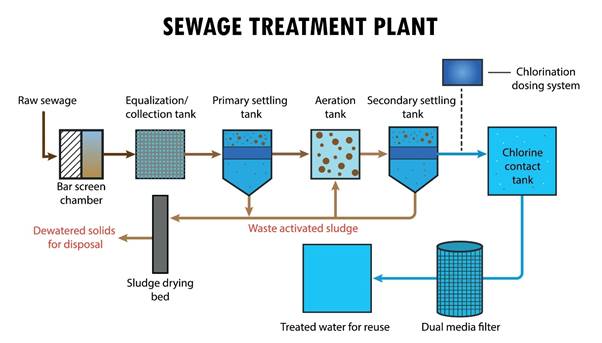
This Work Breakdown Structure (WBS) outlines a comprehensive upgrade for an existing Wastewater Treatment Plant (WWTP). It is organized by project phase and discipline, drilling down to specific actionable work packages at Level 4.

image

Image Source: Shutterstock

1.0 Wastewater Treatment Plant (WWTP) Upgrade Project

  • 1.1 Project Management & Administration
    • 1.1.1 Project Planning & Controls
      • 1.1.1.1 Project Management Plan (PMP) Development
      • 1.1.1.2 Master Schedule Development (CPM)
      • 1.1.1.3 Cost Estimation & Budgeting
    • 1.1.2 Regulatory & Permitting
      • 1.1.2.1 Environmental Impact Assessment (EIA)
      • 1.1.2.2 NPDES Permit Modification
      • 1.1.2.3 Local Building & Grading Permits
    • 1.1.3 Stakeholder Management
      • 1.1.3.1 Monthly Progress Reporting
      • 1.1.3.2 Public Community Meetings
  • 1.2 Engineering & Design
    • 1.2.1 Preliminary Design
      • 1.2.1.1 Basis of Design Report (BODR)
      • 1.2.1.2 Hydraulic Profile Calculations
      • 1.2.1.3 Process Simulation Modeling
    • 1.2.2 Detailed Design
      • 1.2.2.1 Civil & Site Drawings (30/60/90%)
      • 1.2.2.2 Process Mechanical Drawings (30/60/90%)
      • 1.2.2.3 Electrical & Instrumentation Drawings (30/60/90%)
    • 1.2.3 Bid Documents
      • 1.2.3.1 Technical Specifications
      • 1.2.3.2 Issued for Construction (IFC) Drawings
  • 1.3 Procurement
    • 1.3.1 Major Process Equipment
      • 1.3.1.1 Headworks Screens & Compactors
      • 1.3.1.2 High-Efficiency Turbo Blowers
      • 1.3.1.3 Membrane Bioreactor (MBR) Modules
      • 1.3.1.4 UV Disinfection Banks
    • 1.3.2 Contractor Services
      • 1.3.2.1 General Contractor Solicitation
      • 1.3.2.2 Electrical Subcontractor Selection
      • 1.3.2.3 SCADA Integrator Selection
  • 1.4 Site Work & Civil Construction
    • 1.4.1 Site Preparation
      • 1.4.1.1 Mobilization & Temp Facilities
      • 1.4.1.2 Erosion & Sediment Control Install
    • 1.4.2 Demolition & Bypass
      • 1.4.2.1 Temporary Bypass Pumping Setup
      • 1.4.2.2 Demolition of Existing Clarifier Mechanisms
      • 1.4.2.3 Removal of Decommissioned Piping
    • 1.4.3 Yard Piping
      • 1.4.3.1 Excavation & Trenching
      • 1.4.3.2 Installation of Interconnecting Process Pipe
      • 1.4.3.3 Backfill & Compaction
  • 1.5 Concrete & Structural
    • 1.5.1 Headworks Structure
      • 1.5.1.1 Channel Modifications & Re-profiling
      • 1.5.1.2 Equipment Pad Pouring
    • 1.5.2 Aeration Basins
      • 1.5.2.1 Wall Repair & Coating
      • 1.5.2.2 Baffle Wall Construction
    • 1.5.3 Solids Handling Building
      • 1.5.3.1 Structural Steel Framing
      • 1.5.3.2 Roof Decking & Installation
  • 1.6 Process Mechanical Installation
    • 1.6.1 Primary Treatment
      • 1.6.1.1 Mechanical Bar Screen Installation
      • 1.6.1.2 Grit Removal System Installation
    • 1.6.2 Secondary Treatment (Biological)
      • 1.6.2.1 Fine Bubble Diffuser Installation
      • 1.6.2.2 Air Header Piping & Valve Install
      • 1.6.2.3 Return Activated Sludge (RAS) Pump Install
    • 1.6.3 Tertiary & Disinfection
      • 1.6.3.1 Filter Feed Pump Installation
      • 1.6.3.2 UV Channel Equipment Install
  • 1.7 Electrical, Instrumentation & Controls (EI&C)
    • 1.7.1 Power Distribution
      • 1.7.1.1 Main Switchgear Upgrade
      • 1.7.1.2 Motor Control Centers (MCC) Installation
      • 1.7.1.3 Variable Frequency Drives (VFD) Mounting
    • 1.7.2 Instrumentation
      • 1.7.2.1 Flow Meter & Level Sensor Install
      • 1.7.2.2 Dissolved Oxygen (DO) Probe Install
    • 1.7.3 SCADA System
      • 1.7.3.1 PLC Panel Fabrication & Landing
      • 1.7.3.2 Fiber Optic Network Ring Loop
      • 1.7.3.3 HMI Screen Programming
  • 1.8 Commissioning & Closeout
    • 1.8.1 Testing & Startup
      • 1.8.1.1 Hydrostatic Testing of Basins/Pipes
      • 1.8.1.2 Dry Testing (Motors/Rotation Check)
      • 1.8.1.3 Wet Testing (Clean Water)
      • 1.8.1.4 Process Startup (Seeding Biology)
    • 1.8.2 Training & Documentation
      • 1.8.2.1 Operator Training Sessions
      • 1.8.2.2 O&M Manual Compilation
      • 1.8.2.3 As-Built Drawings

You can then refine, edit, or expand further based on your team’s expertise.

Benefits of AI-Generated WBS

Faster Project Initiationg

What usually takes several meetings can now be drafted in minutes.

Standardized Structure Across Projects

Using AI helps enforce consistency across your portfolio.

Jumpstart for Stakeholder Workshops

Start with a draft rather than a blank page—saving hours of discussion.

Better for Early Estimates and Proposals

Proposal teams and estimators can quickly align scope before building schedules and costs.

Best Practices for Success

To get high-quality WBS output from a single prompt:

  • Provide context (industry, project size, key objectives).
  • Specify desired WBS levels (e.g., Level 1–3 or 1–4).
  • Ask for format: numbered hierarchy, table, or outline.
  • Mention assumptions or constraints if known.
  • Use clear, direct language.

The better the input, the better the WBS.

AI Won’t Replace Project Managers—But It Will Empower Them

AI doesn’t eliminate the need for expertise. Instead, it enhances the PM’s ability to work faster, focus on what matters most, and improve the quality of planning artifacts. A WBS still needs human validation, stakeholder alignment, and tailoring to the organization’s processes.

But starting with a smart, AI-generated draft gives project teams a major strategic advantage.

Final Thoughts

Generating a Work Breakdown Structure used to be a slow, manual process. Now, with AI, you can create a detailed, structured WBS with one prompt—accelerating project initiation, improving quality, and enabling teams to focus on strategic decision-making rather than administrative work.

If you’re a project manager, estimator, scheduler, or project controls professional, integrating AI into your WBS development process is no longer optional—it’s the new competitive standard.

image_print