
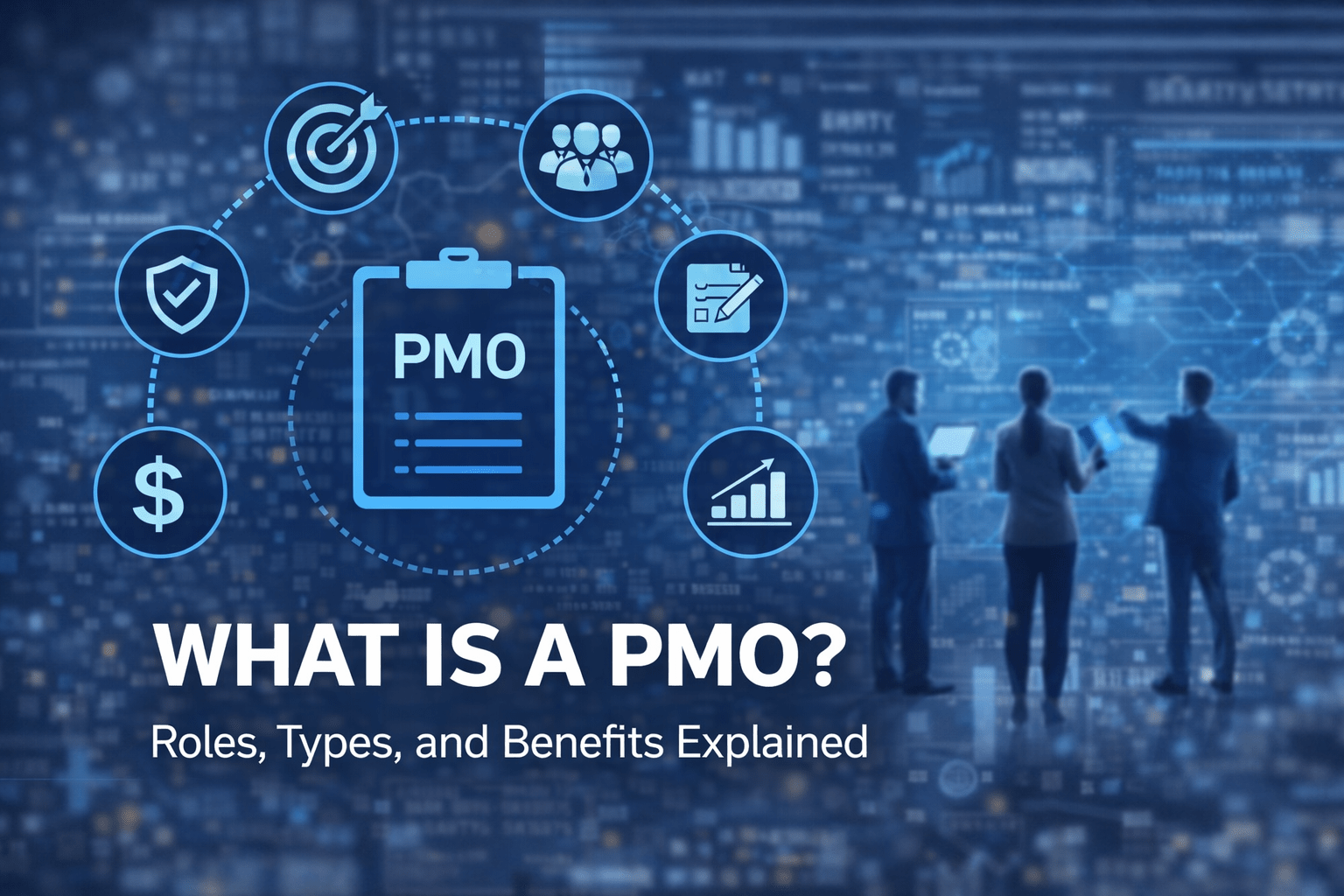
In today’s complex project environments, especially in construction, infrastructure, IT, and government programs—successful delivery requires more than individual project managers working in isolation. This is where the Project Management Office (PMO) plays a critical role.
A PMO provides structure, consistency, governance, and strategic alignment across projects. Whether you’re part of a growing organization, a public agency, or a mature enterprise managing portfolios worth millions, understanding how a PMO functions is essential.
This guide explains what a PMO is, the different types of PMOs, their core roles and responsibilities, and the business benefits they deliver.
What Is a PMO?
A Project Management Office (PMO) is a centralized organizational unit responsible for defining, maintaining, and improving project management standards and practices across an organization.
Rather than managing a single project, a PMO oversees multiple projects or programs, ensuring they align with organizational strategy, follow consistent processes, and deliver measurable value.
At its core, a PMO answers three critical questions:
- Are we doing the right projects?
- Are we doing projects the right way?
- Are we delivering projects successfully and consistently?
Core Roles and Responsibilities of a PMO
While PMO responsibilities vary by organization and maturity level, most PMOs perform the following core functions:
1. Governance and Standards
PMOs establish project management frameworks, methodologies, and best practices. This includes:
- Project lifecycle standards
- Stage-gate reviews
- Documentation templates
- Change control processes
This governance ensures projects are executed consistently and transparently.
2. Portfolio and Program Oversight
PMOs help leadership prioritize projects based on:
- Strategic alignment
- Risk exposure
- Resource availability
- Financial impact
This prevents overcommitment and ensures resources are focused on high-value initiatives.
3. Performance Tracking and Reporting
A PMO consolidates project data to provide leadership with:
- Schedule performance
- Cost forecasts
- Risk trends
- Key performance indicators (KPIs)
With modern tools and AI, PMOs increasingly provide predictive insights, not just status updates.
4. Resource Management
PMOs coordinate shared resources across projects, helping to:
- Resolve conflicts
- Balance workloads
- Improve utilization
- Support long-term capacity planning
5. Coaching and Capability Development
Many PMOs support project managers by:
- Providing training
- Mentoring junior PMs
- Improving organizational project maturity
This role is especially important in public sector and infrastructure programs.
Types of PMOs
Not all PMOs operate the same way. Understanding the three main PMO types helps organizations choose the right model.
1. Supportive PMO
Level of Control: Low
A supportive PMO acts as a knowledge hub, offering:
- Templates
- Best practices
- Lessons learned
- Training materials
This model works well for organizations with experienced PMs who need guidance rather than enforcement.
2. Controlling PMO
Level of Control: Moderate
A controlling PMO enforces:
- Standardized methodologies
- Compliance with governance processes
- Mandatory reporting requirements
This type is common in regulated environments such as government agencies and large enterprises.
3. Directive PMO
Level of Control: High
A directive PMO directly manages projects by assigning project managers and owning delivery responsibility.
This model is often used when:
- Project maturity is low
- Projects are highly complex
- Executive oversight is critical
Benefits of a PMO
When implemented correctly, a PMO delivers measurable organizational value.
✔ Improved Project Success Rates
Standardized processes reduce variability and improve predictability across projects.
✔ Better Strategic Alignment
Projects are selected and prioritized based on organizational goals—not urgency alone.
✔ Increased Transparency and Control
Leadership gains real-time visibility into cost, schedule, and risk performance.
✔ Stronger Risk Management
PMOs proactively identify systemic risks and trends across the portfolio.
✔ More Efficient Use of Resources
Resource conflicts are minimized and productivity improves.
The Evolving Role of AI in PMOs
Modern PMOs are increasingly leveraging Artificial Intelligence to:
- Forecast cost and schedule risks
- Automate reporting
- Analyze performance trends
- Support data-driven decision-making
AI-enabled PMOs are shifting from reactive reporting to predictive and prescriptive governance, significantly increasing their strategic value.
When Does an Organization Need a PMO?
A PMO becomes critical when:
- Projects consistently miss deadlines or budgets
- Leadership lacks visibility into project performance
- Resources are stretched across competing initiatives
- Strategic priorities are unclear or misaligned
In these situations, a PMO provides the structure needed to regain control.
Final Thoughts
A PMO is not bureaucracy—it is a strategic enabler. When tailored to the organization’s maturity and objectives, a PMO improves delivery confidence, accountability, and long-term success.
As projects grow more complex and data-driven, PMOs—especially those empowered by AI—will continue to play a central role in modern project management.
