
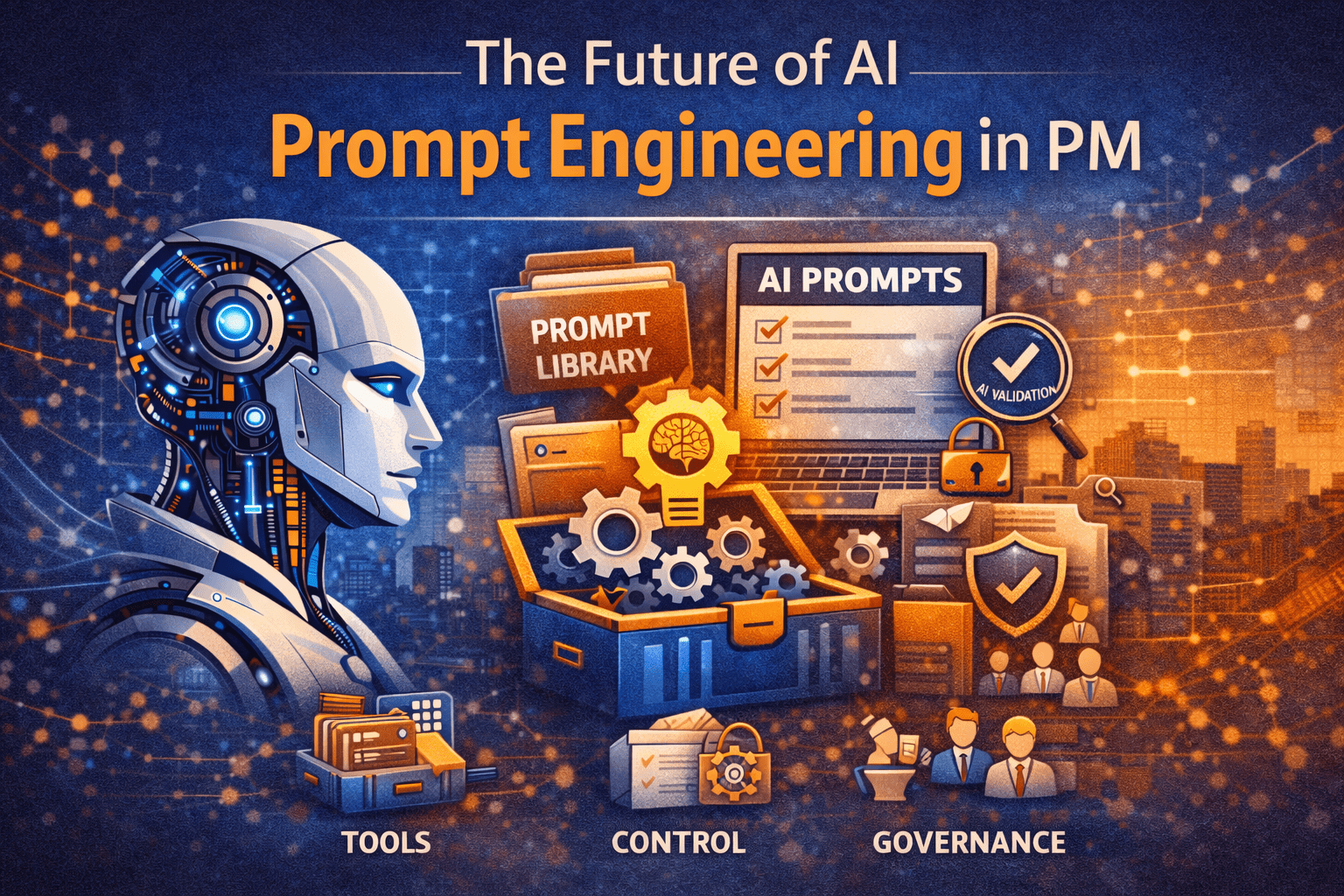
Why Prompt Engineering Tools Are Critical for Project Management
Artificial intelligence has become an integral part of modern project management. From drafting reports to analyzing risks and monitoring schedules, AI helps PMs, schedulers, and PMO leaders make better decisions faster. However, the efficiency and reliability of AI depend on Prompt Engineering tools—the systems, templates, and frameworks used to guide AI responses.
For project professionals, understanding and leveraging these tools is no longer optional. Poorly constructed prompts can produce misleading outputs, compromise governance, or introduce bias. Properly managed, prompt engineering tools enhance consistency, control, and insight across projects.
This article explores the current and future role of Prompt Engineering tools in project management, with actionable guidance and real-world examples for PMOs and project teams.
What Prompt Engineering Tools Are
Prompt Engineering tools are not just AI platforms. They include any structured mechanisms that help project teams design, validate, and reuse prompts effectively. In practice, these tools support:
- Consistency: Ensuring multiple users generate similar AI outputs.
- Traceability: Linking AI output to input assumptions and data.
- Risk Management: Reducing the likelihood of biased or inaccurate outputs.
- Knowledge Capture: Maintaining prompt libraries and lessons learned.
For project teams, these tools become a bridge between AI capabilities and professional judgment, ensuring outputs remain aligned with project objectives and governance.
Core Categories of Prompt Engineering Tools
1. AI Platforms with Structured Prompt Interfaces
Modern AI platforms often include advanced prompt guidance, such as:
- Role specification (e.g., “Act as a project risk analyst”)
- Context persistence across sessions
- Output formatting constraints
Project example: A PMO uses AI to generate a risk summary for multiple infrastructure projects. Structured prompts ensure every report adheres to the same risk categorization and format, reducing review cycles.
2. Prompt Libraries and Repositories
A central repository of tested prompts ensures that project teams reuse high-quality templates rather than reinventing prompts.
Features:
| Feature | Benefit |
| Purpose & Phase | Clarifies when and how to use the prompt |
| Inputs Required | Ensures necessary project context is included |
| Example Outputs | Sets quality expectations |
| Risk Level | Guides review requirements |
Use case: An IT PMO maintains a library for schedule risk assessments, enabling junior PMs to use proven prompt templates while adhering to governance.
3. Documentation and Knowledge Management Tools
Treating prompts as organizational knowledge allows teams to:
- Track versions of prompts
- Assign ownership
- Audit outputs
- Capture lessons learned
These practices align with standard project controls frameworks like PMBOK and EVM.
4. Spreadsheet and Template-Based Tools
Even basic tools like spreadsheets can serve as effective prompt engineering support. Templates can enforce structure, capture assumptions, and link AI outputs to project data.
Example: A construction PMO uses a spreadsheet to document:
- Prompt purpose
- Input requirements
- Assumptions
- Expected AI outputs
This prevents incomplete or inconsistent AI instructions across teams.
5. Collaboration and Workflow Tools
Prompt outputs often require review before influencing decisions. Tools that support collaboration ensure:
- Peer review of prompts
- Controlled approval workflows
- Safe sharing of high-risk outputs
Real-world example: A PMO managing a large infrastructure program implemented workflow tools to review AI-generated cost analysis before executive presentations.
Step-by-Step Approach to Using Prompt Engineering Tools
Step 1: Identify High-Impact Use Cases
Focus on areas where AI outputs influence key decisions, such as:
- Cost forecasts
- Schedule recovery strategies
- Risk narrative development
Step 2: Standardize Where It Matters
High-visibility and repetitive prompts benefit most from templates. Low-risk creative prompts can remain flexible.
Step 3: Align Tools with Team Maturity
Small teams may start with shared spreadsheets and prompts in collaborative documents. Mature PMOs can implement prompt libraries, governance workflows, and usage tracking.
Step 4: Train Teams in Prompt Thinking
Effective tool usage requires understanding how to frame questions, declare assumptions, and interpret AI outputs critically. Tools alone cannot guarantee quality.
Real-World Project Examples
Engineering Design Projects
Design managers used a structured prompt library to generate design review summaries. The tool reduced inconsistencies and improved traceability across complex multi-discipline designs.
Infrastructure Programs
A transportation PMO applied prompt templates for schedule risk reviews. Standardization decreased late-stage surprises and improved portfolio-level reporting.
IT Programs
An enterprise PMO standardized AI-assisted risk summaries across multiple projects. Templates ensured consistent language, reduced confusion in executive reporting, and increased trust in outputs.
Common Mistakes When Using Prompt Engineering Tools
- Treating AI as a replacement for human judgment
- Over-standardizing creative problem-solving
- Sharing sensitive project data without controls
- Skipping peer review for high-risk outputs
- Neglecting updates to prompt libraries
Avoiding these pitfalls ensures prompt engineering tools enhance decision quality rather than create risk.
Practical Tips for Project Managers
- Maintain a personal prompt checklist
- Label AI-assisted outputs for clarity
- Store high-performing prompts for reuse
- Review AI outputs critically against project controls
- Align prompt use with project governance standards
For applied AI in project controls, see:
https://pmintelli.com/top-ai-tools-for-construction-project-control/
The Future of Prompt Engineering Tools in Project Management
As AI becomes more embedded in project delivery, prompt engineering tools will:
- Become PMO-owned capabilities
- Integrate with standard project controls and governance
- Include automated validation and compliance checks
- Enable AI to support decision-making without compromising accountability
PMs who adopt these tools proactively position themselves to leverage AI safely, consistently, and strategically.
Strategic Takeaway
Prompt Engineering tools are no longer optional for professional project management. They ensure AI outputs are consistent, auditable, and aligned with governance requirements. When combined with professional judgment, they transform AI from a novelty into a reliable decision-support system.
Project managers and PMOs that invest in structured tools today will define how AI is safely and effectively used in projects tomorrow.
